

Opioid analgesics have long stood at the crossroads of medicine, relief, and controversy. They are among the most powerful pain-relieving drugs known to humanity, capable of turning unbearable suffering into manageable discomfort. Yet, opioids are also at the center of a global public health crisis, with their misuse leading to dependence, overdose, and widespread social impact.
This article serves as a comprehensive guide to opioid analgesics, examining how they work, when and why they are prescribed, their risks, and emerging alternatives. If you’re seeking an in-depth resource to understand opioids from medical, pharmacological, and societal perspectives, this guide is the foundation.
(For readers interested in specific sub-topics, we’ve also published detailed articles such as why doctors may limit opioid prescriptions, how opioids affect the body, the downsides of opioid use, and the purpose of opioids in medicine.)
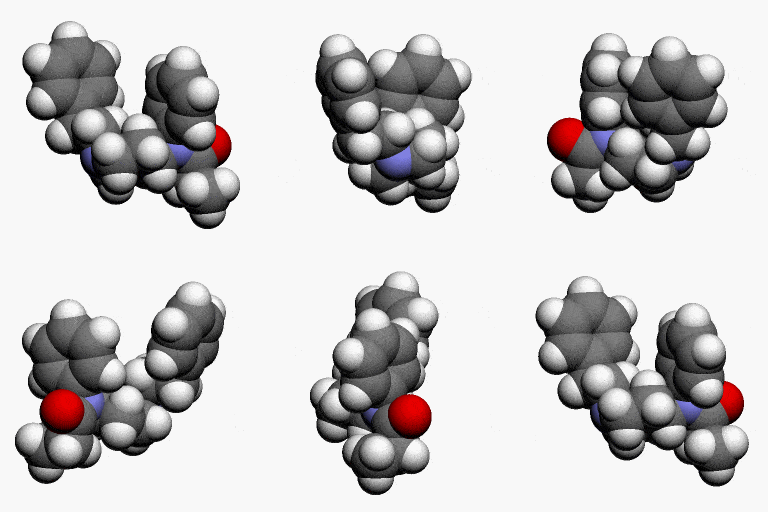
What Are Opioids Analgesics?
Opioid analgesics are a class of medications that bind to opioid receptors in the brain, spinal cord, and peripheral nervous system to reduce the perception of pain. They are considered the gold standard for managing moderate to severe pain, especially in cases where other analgesics are insufficient.
Origins and classification
- Natural opiates are derived directly from the opium poppy, Papaver somniferum. Examples: morphine and codeine.
- Semi-synthetic opioids are chemically modified versions of natural opiates. Examples: oxycodone, hydromorphone, and heroin.
- Synthetic opioids are entirely lab-engineered. Examples: fentanyl, tramadol, and methadone.
Commonly prescribed opioids
- Morphine: The prototype opioid, often used in hospital settings.
- Oxycodone: Widely prescribed for both acute and chronic pain.
- Fentanyl: Extremely potent (up to 100× stronger than morphine), used in anesthesia and severe pain management.
- Codeine: Often combined with acetaminophen for moderate pain and cough suppression.
Global perspective
The World Health Organization’s “pain ladder” identifies opioids as critical for stage 3 pain management — typically cancer pain or postoperative recovery. Despite their efficacy, opioid availability varies worldwide. In high-income countries, they’re commonly prescribed, while in many low-income countries, access is severely restricted due to cost, policy, or fears of misuse.
How Do Opioid Analgesics Work?
Mechanism of action
Opioids exert their effects primarily by binding to three major receptor types:
- Mu (μ) receptors: Mediate pain relief, euphoria, respiratory depression, and dependence.
- Kappa (κ) receptors: Contribute to spinal analgesia and dysphoria.
- Delta (δ) receptors: Influence mood and contribute to analgesia.
By binding to these receptors, opioids block the transmission of pain signals in the central nervous system, altering the way the brain perceives pain.
Effects on the brain and body
- Central nervous system: Pain relief, sedation, euphoria.
- Respiratory system: Risk of slowed breathing at higher doses.
- Gastrointestinal tract: Constipation due to reduced peristalsis.
- Endocrine system: Long-term use can suppress hormone production.
Dopamine and the reward pathway
Opioids trigger the release of dopamine, the “pleasure chemical,” reinforcing the desire to continue using the drug. This reward loop explains why opioids carry such a high risk of dependence and addiction.
👉 For a deep dive into this topic, see our post on: How Opioid Analgesics Affect the Body.

Medical Uses of Opioid Analgesics
Acute pain management
Opioids are indispensable for post-surgical pain, trauma care, and severe injury. In these contexts, short-term use is highly effective and typically safe under supervision.
Chronic pain
- Cancer pain: Opioids are essential in oncology and palliative care.
- Non-cancer chronic pain: More controversial, as long-term benefits are less clear and risks are greater.
- Neuropathic pain: Sometimes resistant to opioids, but occasionally managed with adjunct therapies.
Palliative care
In end-of-life settings, opioids play a vital role in ensuring dignity and relief, often prioritized over long-term risk concerns.
Clinical guidelines
- The CDC (U.S.) recommends opioids as a last resort after non-opioid therapies fail.
- The WHO emphasizes opioids as an essential medicine for severe pain, especially in cancer care.
👉 For more on this subject, read: The Purpose of Opioid Analgesics in Modern Medicine.
Risks and Downsides
Tolerance and dependence
With prolonged use, the body adapts, requiring higher doses for the same relief. Dependence develops as the body becomes accustomed to the presence of opioids.
Side effects
- Constipation
- Drowsiness
- Nausea
- Confusion
- Respiratory depression (especially dangerous in overdoses)
Addiction and misuse
The reinforcing dopamine pathway means opioids are highly addictive, even when prescribed responsibly. This risk is amplified with high doses or extended use.
Long-term health effects
Chronic opioid therapy can contribute to hormonal imbalance, immune suppression, and increased pain sensitivity (opioid-induced hyperalgesia).
👉 For expanded coverage, see our related post: The Downsides of Opioid Analgesics.
Synthetic Opioids: The Silent Epidemic Reshaping the Global Drug Crisis
While natural and semi-synthetic opioids like morphine and oxycodone have long been used in medicine, the rise of synthetic opioids has dramatically reshaped the global drug crisis.
Substances like fentanyl and its analogues are up to 100 times stronger than morphine, making them a leading cause of overdose deaths worldwide. These lab-made opioids are often illicitly manufactured and mixed into other drugs, increasing the risk of accidental overdose.
The article explores how synthetic opioids spread through global supply chains, their role in escalating overdose epidemics, and the urgent need for public health interventions, harm reduction strategies, and international cooperation.
👉 Read the full article here: Synthetic Opioids: The Silent Epidemic Reshaping the Global Drug Crisis
Why Doctors Limit Prescriptions
Healthcare providers face growing pressure to balance patient needs with public health risks. Prescribing limits are shaped by:
- National regulations (e.g., U.S. CDC opioid guidelines, EU directives).
- Patient safety concerns (overdose, dependence, diversion).
- Alternative therapies that may be safer in the long run.
Doctors often set time-bound prescriptions, limit refills, or require patients to try non-opioid options first.
👉 For more details, visit: Why Doctors May Limit Your Use of Opioid Analgesics.
Alternatives to Opioid Analgesics
Non-opioid medications
- NSAIDs (ibuprofen, naproxen): Effective for inflammation.
- Acetaminophen: Safe for mild pain.
- Antidepressants & anticonvulsants: Effective for neuropathic pain.
Non-pharmacological options
- Physical therapy, exercise, yoga
- Cognitive behavioral therapy (CBT)
- Acupuncture, massage, mindfulness
Emerging therapies
- Ketamine: NMDA receptor antagonist showing promise in chronic pain.
- Cannabinoids (CBD/THC): Increasingly studied for neuropathic pain.
- Psychedelics (psilocybin, MDMA): Currently in clinical trials for PTSD/pain overlap.
The Future of Opioid Analgesics
- Abuse-deterrent formulations (tamper-resistant pills, slow-release patches).
- Personalized medicine: Genetic profiling to tailor prescriptions.
- Public health initiatives: Expanding access to naloxone, better prescription monitoring.
While opioids are unlikely to disappear from medicine, their future will be shaped by innovations that aim to preserve benefits while minimizing harm.
Journavx (Suzetrigine): A New Era in Non-Opioid Pain Relief
In 2025, the FDA approved Journavx (suzetrigine), the first new non-opioid painkiller in over two decades. Unlike opioids, it works by blocking NaV1.8 sodium channels in nerves, preventing pain signals from reaching the brain without triggering the dopamine pathways that cause addiction.
Early trials show it is effective in acute surgical pain, but not in chronic conditions like sciatica. While promising, Journavx is expensive (~$15.50/pill) and long-term safety remains unclear. Still, its approval marks a major step in reducing reliance on opioids in pain management (FDA, AP News).
👉 Read the full analysis here: Journavx (Suzetrigine): A New Era in Non-Opioid Pain Relief.
Frequently Asked Questions
Are opioids addictive if taken as prescribed?
Yes. Even under medical supervision, opioids can cause dependence, though the risk is lower with short-term use.
What is the difference between opioids and opiates?
Opiates are naturally derived (morphine, codeine). Opioids include natural, semi-synthetic, and synthetic drugs.
Can opioids be used safely long-term?
It’s possible in rare, closely monitored cases, but risks (dependence, tolerance) increase substantially over time.
What is the strongest opioid available?
Clinically, fentanyl is among the strongest opioids used in medicine. Carfentanil, even more potent, is generally restricted to veterinary use.
Conclusion
Opioid analgesics remain one of medicine’s most powerful tools and most controversial drugs. They provide relief where nothing else works but carry profound risks when misused.
A balanced understanding — of benefits, risks, and alternatives — is essential for both patients and practitioners.
👉 Continue your learning:
- Why Doctors Limit Opioid Prescriptions
- How Opioids Affect the Body
- The Downsides of Opioid Analgesics
- The Purpose of Opioid Analgesics in Medicine
- Etizolam Withdrawal & Dependence: Understanding the Risks
- Etizolam Dosage & Administration: Research Guidelines and Safety Tips
- 1P-LSD Safety Profile: Risks, Side Effects, and Harm Reduction
- Potential Therapeutic Uses of 1P-LSD: Insights from Psychedelic Science
- Legal Status of 1P-LSD Worldwide: A Country-by-Country Guide
Recent Comments